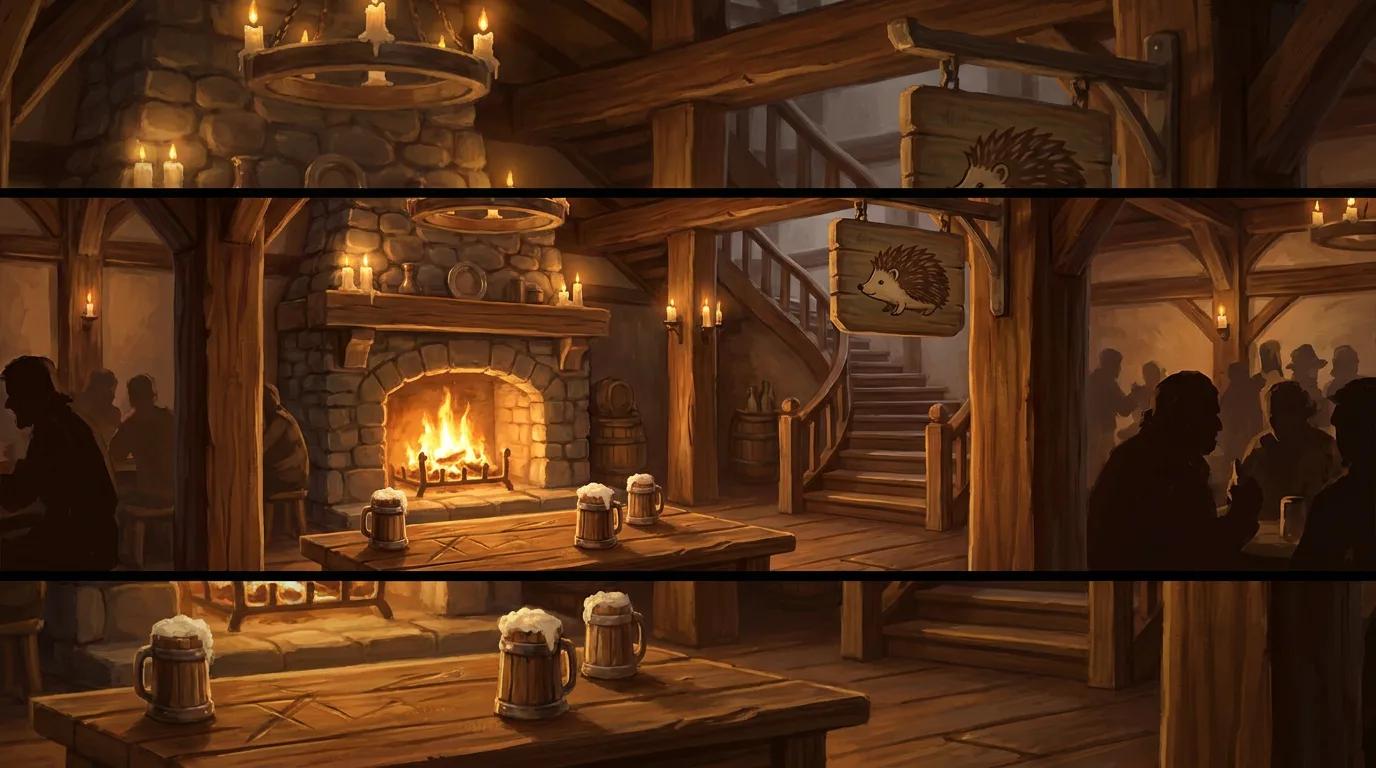
Why every good tavern is named after a picture
Tavern names feel invented, but they follow rules older than printed menus. The Prancing Pony, The Red Lion, and the dive your party stumbled into last session all obey the same grammar, because fantasy borrowed it wholesale from real English pub signs. This generator builds names the way real public houses acquired them, and this page explains where that grammar came from and how to pick names that make a tavern feel lived-in.
Why pubs are named after pictures
For most of history, most customers could not read. A medieval public house was not identified by lettering but by the sign hanging over its door: a painted lion, a swan, a crossed pair of keys. The name of the house was simply a description of the picture, which is why the classic form is "The" plus a memorable image. In 1393, during the reign of Richard II, London ale-sellers were required to display a sign at all so that the authorities could identify and inspect the premises, and the signboard became a legal fixture of the trade. Before that, the oldest marker was even simpler: a bush or bundle of greenery on a pole, inherited from Roman tavern practice, which survives today in pubs still called The Bush.
Heraldry did the rest
Once every alehouse needed a sign, landlords borrowed images people already recognized: the heraldic badges of kings and local lords. Richard II's own badge was a white hart, and White Hart remains one of the most common pub names in England. The Red Lion, usually counted the most common of all, is a heraldic lion off a badge; the Crown declared loyalty to whoever wore it, cheap insurance in unstable centuries. That is why so many convincing tavern names sound like a coat of arms read aloud. The same pressures produced the other classic shapes: paired signs like the Fox and Hounds, possessives like the King's Head, and the landlord's own name over the door. This generator uses exactly those schemes, restocked with fantasy vocabulary.
Making a tavern name work at the table
For a campaign or a novel, choose the name for the impression it must make in one line of narration. A party walking into The Crooked Kettle expects stew and safety; walking into The Drowned Rat, they check for exits. Match the register to the district: wine halls and gilded peacocks uptown, eels and bilgewater by the docks, one haunted pub at the crossroads that everyone mentions and no one visits. Keep a bench of spare names per town so an improvised detour never stalls, and let one tavern break the local pattern on purpose; a spotless establishment in a rough quarter is a plot hook before anyone speaks. The optional house specialty lines the generator produces, a dish plus a quirk, are written to be read aloud as the party crosses the threshold.
How the generator works
Under the hood, each of the six styles owns a curated corpus of sign adjectives, heraldic animals and objects, possessive endings, keeper names, establishment nouns, standalone names, and house specialties, more than three hundred components in total, assembled by the same schemes real signs used: the classic "The Adjective Animal," the paired sign, the possessive, and the keeper's own name. A seeded random engine walks those schemes, so results are deterministic for a given seed. The worked examples further down this page are generated by the exact same code and verified by automated tests, so what you see is what the tool truly produces. Generate a batch, keep the two or three names that suggest a story on their own, and run it again.